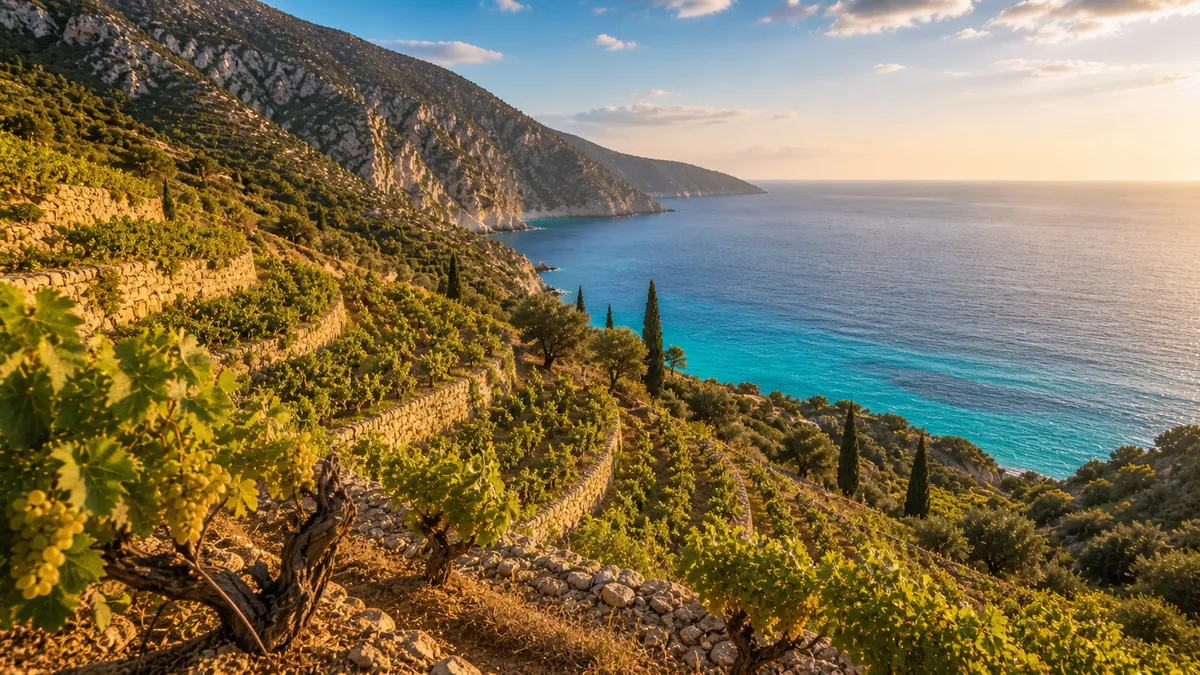
There's a white wine that grows on the slopes of Mount Ainos and, with meaningful character, almost nowhere else in the world. It's made from the Robola grape — indigenous to Kefalonia — and it tastes like what the island smells like in early morning: mineral, citrus, limestone, something clean and old.
What Robola Tastes Like
Robola is a dry white wine with moderate alcohol (typically 12-13%) and high acidity. Expect notes of lemon, green apple and white peach, with a distinctive mineral quality that comes from the limestone and clay soils of the Omala Valley. It's not a showy wine — it doesn't try to impress in the first sip. It rewards attention and, particularly, food.
It pairs naturally with the island's cuisine: fresh fish, grilled octopus, the local seafood dishes, and the lighter meat preparations. A cold glass of Robola with bourdeto (the island's spicy fish stew) is one of those combinations that feels like it was designed by someone who knew exactly what they were doing.
The Robola Cooperative: Where to Go
The Agricultural Cooperative of Robola Producers of Kefalonia (Orealios Gaea) in the Omala Valley — known simply as the Robola Cooperative — is the obvious first stop. Located about 13km from Argostoli, it's also adjacent to the Monastery of Saint Gerasimos, making a logical combined visit.
The cooperative produces the most widely available Robola on the island and exports to Greece and internationally. Tastings are available on-site; the shop sells bottles at cooperative prices, which are lower than you'll find elsewhere.
The surrounding valley — vineyards on the lower slopes, fir forests on the heights above — is itself worth the drive.
Other Producers
Beyond the cooperative, a handful of private producers make Robola of notable quality. Gentilini Winery is among the most respected, with international awards and bottles widely available in Argostoli and Fiskardo wine shops. Sclavos Wines in Lixouri is a biodynamic producer on the Paliki peninsula, known for natural wines from native varieties including Robola, Mavrodaphne and Vostilidi. Petropoulos, a traditional family winery, rounds out the island's top producers.
The History
The Venetians introduced the Robola vine to Kefalonia, or so the dominant account goes — though some argue the grape predates Venetian rule. Either way, it has been grown here for centuries and is now classified as a Protected Designation of Origin (PDO) wine, meaning "Robola of Kefalonia" can only be produced on the island.
Practical Notes
Robola is widely available in Kefalonia's restaurants — ask for it by name rather than just "white wine." Prices are reasonable (€15-25 for a good bottle in a restaurant). It travels reasonably well; a few bottles make an excellent souvenir.
To discover more about traditional Kefalonian food and wine, including the dishes that pair best with Robola, see our food guide.
Want to know where to taste Robola near where you're staying? Ask Memas.
Planning your trip to Kefalonia? Ask Memas — our AI island guide →