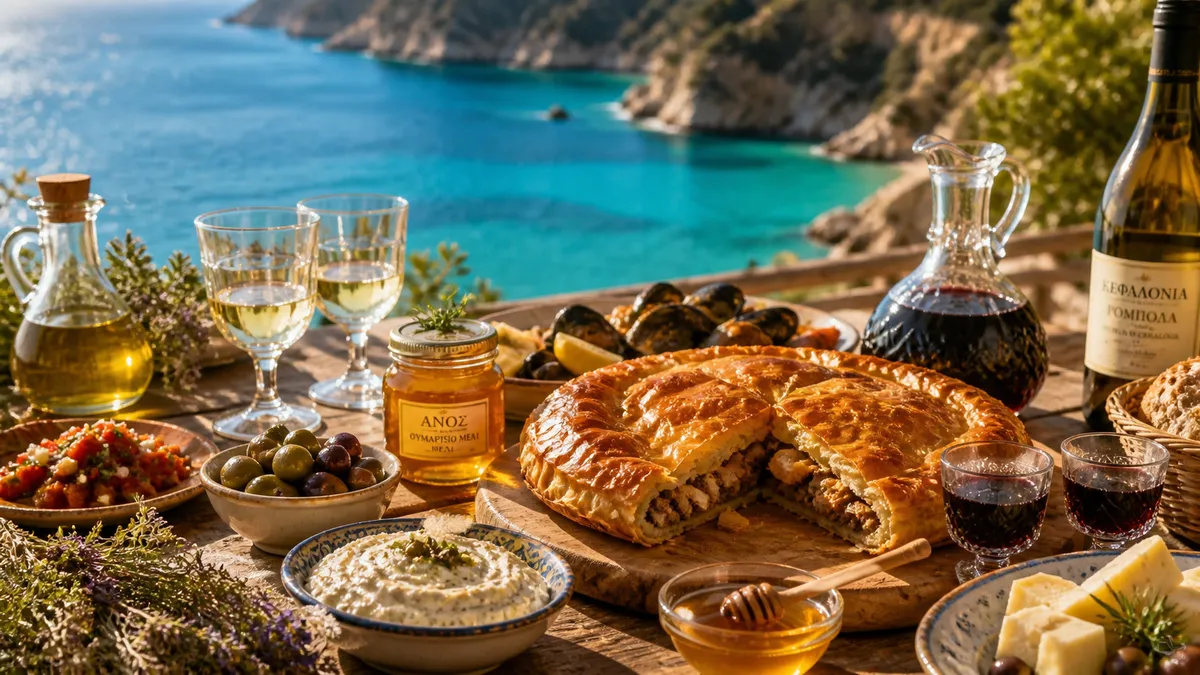
Traditional Kefalonian Food — The Dishes, Wines and Flavours That Define the Island
The smell hits you before you see anything. Cinnamon and allspice, slow-cooked meat, pastry crisping in an oven that's been warm since dawn. You're standing in someone's kitchen in a Kefalonian village — it might be Easter Saturday, or a name day, or just a Sunday when the family decided today was a good day for kreatopita. Nobody follows a recipe. The grandmother knows by feel. The daughter argues about the rice. The son steals a piece from the edge of the pan before it's ready.
This is Kefalonian food: deeply personal, fiercely traditional, and almost impossible to find in a tourist brochure.
An Island That Ate Differently
Kefalonia's kitchen doesn't quite sound like the rest of Greece, and there's a reason. Centuries of Venetian rule left their mark — not in pasta and pizza, but in spice combinations, sweet-sour flavours, and a sophistication that surprises people expecting only grilled fish and village salad. The island's relative isolation preserved dishes that disappeared elsewhere. And the ingredients — wild thyme honey from Ainos, olive oil from groves that predate living memory, Robola grapes from the Omala valley — give everything a flavour that's rooted in this specific piece of earth.
Kreatopita — The One Dish You Must Try
If Kefalonia had a national dish, this would be it. Kreatopita (κρεατόπιτα) is a meat pie, but calling it that feels like calling the Parthenon a building. The filling is lamb or veal — sometimes both — slow-cooked with rice, onions, tomato, and generous amounts of allspice and cinnamon. The pastry is handmade, thick enough to hold its shape, thin enough to crisp. Every family has their own version. Some add a squeeze of lemon. Some insist on only lamb. Arguments about whose mother makes the best one can last for generations.
You'll find kreatopita in tavernas, but the real thing lives in home kitchens — especially at Easter, when it anchors the Sunday table.
Bakaliaros Skordalia — Salt Cod and the Art of Garlic
Salt cod with skordalia (garlic-potato mash) is a fixture of Greek tavernas everywhere, but in Kefalonia it carries particular weight. You'll see it on 25 March (Independence Day and the Feast of the Annunciation) and on Clean Monday, the start of Lent. The fish is soaked, battered and fried; the skordalia is aggressively garlicky, the way it should be. Some places serve it with beetroot on the side, which sounds odd until you try it.
While we're talking garlic: ask for aliada (αλιάδα), Kefalonia's own garlic sauce. Thicker, rawer and more intense than mainland skordalia — it's pounded with bread and olive oil, sometimes almonds, and served alongside fish or boiled greens. If you like garlic, this is your moment.
Kefalonian Rizoto — Not What You Think
Forget Italian risotto. Kefalonian rizoto is its own thing entirely — rice cooked slowly with rooster (or veal, depending on the household), tomato, onion, and stock until it turns thick and deeply savoury. No parmesan, no arborio, no stirring technique. Just patience and a heavy pot. The rooster version is the classic, and the texture should be loose and creamy, never stiff. Village tavernas that still make it properly are worth seeking out — our restaurant guide has suggestions.
Savoro — The Ancient Sweet-Sour
Here's one that surprises visitors. Savoro (σαβόρο) is fish — usually small fried fish like bourgeto or marides — preserved in a sauce of vinegar, rosemary, garlic, and raisins. It's an ancient Mediterranean preservation technique, and the sweet-sour result is addictive. Kefalonian grandmothers still make it at home, preparing batches that improve over two or three days in the fridge. Finding it in a restaurant takes some luck, but when you do, order it without hesitation.
The Sweet Side
Kefalonian sweets lean toward the honest and unfussy. Ladopita (λαδόπιτα) is an olive oil cake — no butter, no pretension — fragrant with cinnamon and orange zest, soaked in a light syrup. It's the kind of thing that appears at the end of a meal without fanfare and makes you ask for the recipe.
At Christmas, the island makes its own kourabiedes (κουραμπιέδες) — the classic Greek butter cookies, except here they're made with olive oil instead of butter. The result is lighter, slightly crumblier, and unmistakably Kefalonian. A small difference that locals are very proud of.
Robola — The Wine That Defines Kefalonia
You can't talk about Kefalonian food without Robola. This PDO white wine grows almost exclusively in the Omala valley, on rocky, mineral-rich soil at altitude. The result is crisp, dry, with a lemony finish and a flinty character that pairs beautifully with fish and seafood.
Visit the Robola Cooperative in Omala — it's the heart of production, and tastings are casual and friendly. You'll also find excellent Robola at Gentilini and other smaller estates.
And don't leave without trying Mavrodaphne (Μαυροδάφνη Κεφαλονιάς) — a sweet, dark red wine used in cooking and served as dessert wine. It's less famous than Robola but deeply local and genuinely delicious with strong cheeses or on its own after dinner.
Honey from the Mountain
Ainos thyme honey (μέλι Αίνου, also called θυμαρόμελο locally) is one of the finest honeys in Greece. Collected above 1,000 metres from wild thyme on Mount Ainos, it's dark amber with an intense, almost resinous aroma. You'll find jars at the Saturday morning market in Argostoli and at roadside stalls near Ainos. It's not cheap, but a small jar brought home may be the best souvenir you take from the island.
Where to Start
The best way into Kefalonian food is a village taverna with handwritten menus and a cook who decides what's for lunch before you arrive. Ask for mageirefta (μαγειρευτά) — the slow-cooked daily dishes — and let the kitchen lead.
For specific places, see our best restaurants guide. If you want a wine-tasting itinerary, a food day-trip plan, or recommendations for where to find kreatopita, ask Memas — our AI concierge knows every kitchen on the island. And if you're looking for more to do between meals, we have plenty of activities and experiences to fill the time.
Planning your trip to Kefalonia? Ask Memas — our AI island guide →