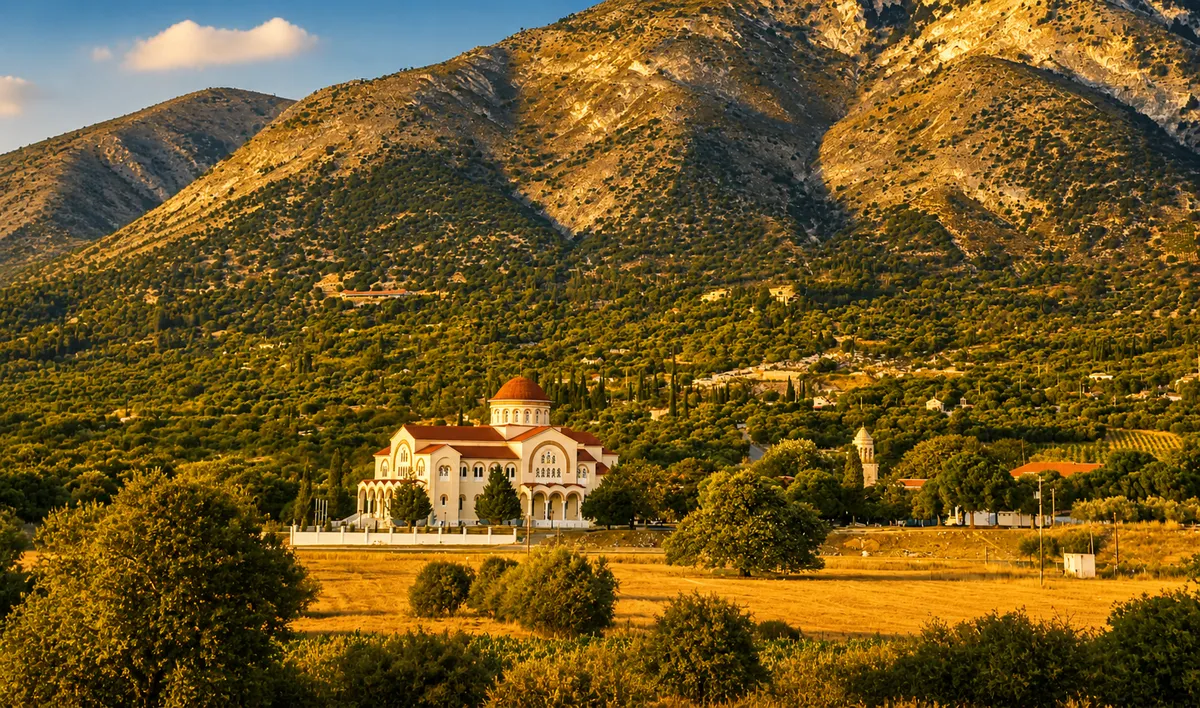
Every Kefalonian knows the name. Memas — the name we gave our AI concierge — is itself derived from Saint Gerasimos: "ο Άγιος να είναι μ' εμάς" ("may the Saint be with us"), compressed over generations into the affectionate nickname. That tells you something about how deeply this figure is woven into the island's identity.
Who Was Saint Gerasimos?
Gerasimos Notaras was born in 1506 in Trikala, Corinthia, into a noble Byzantine family. After years of pilgrimage — Jerusalem, Sinai, Mount Athos — he arrived in Kefalonia around 1555, settling eventually in the Omala Valley, where he lived as a hermit in a cave before founding the monastery that bears his name.
He was known for his healing — particularly of mental illness, which in the tradition of the time was understood as demonic possession — and for his extraordinary humility. He died on August 15, 1579 and was buried at the monastery. When his body was exhumed three years later, it was found incorrupt — the sign of sainthood in Orthodox tradition.
The Monastery
The Monastery of Saint Gerasimos sits in the Omala Valley, about 13km from Argostoli, surrounded by vineyards and fir-covered slopes. The cave where the saint lived — small, austere, surprisingly moving — is open to visitors and accessible via a short descent beneath the monastery.
His relics are housed in a silver reliquary in the main church. The faithful come year-round to pray; the chronically ill and those suffering from mental illness make up a significant portion of pilgrims.
The Two Festivals
August 16 — the day after the Dormition of the Theotokos — is the saint's main feast day, commemorating his death. This is the island's most important religious event, drawing pilgrims from across Greece and the diaspora. The reliquary is carried in procession, the faithful pass beneath it, and the monastery grounds fill with thousands of people. The atmosphere is simultaneously solemn and celebratory.
October 20 — the anniversary of his canonisation — is a second major festival, slightly smaller but equally significant for devout Kefalonians.
Both festivals are accompanied by music, food and the particular joy of a community gathered around something it believes in deeply.
Gerasimos and Kefalonian Identity
The saint appears throughout Kefalonian life in ways both formal and informal: on icons in homes, on the island's coat of arms, in the names of boats and businesses, and in the daily use of "Memas" as a term of endearment and protection. Visiting the monastery — even for those with no religious connection — gives access to something genuine about how this island understands itself.
Want to know when the next festival is and how to get to the monastery from where you're staying? Ask Memas.
Planning your trip to Kefalonia? Ask Memas — our AI island guide →